See it in action
A look inside the system
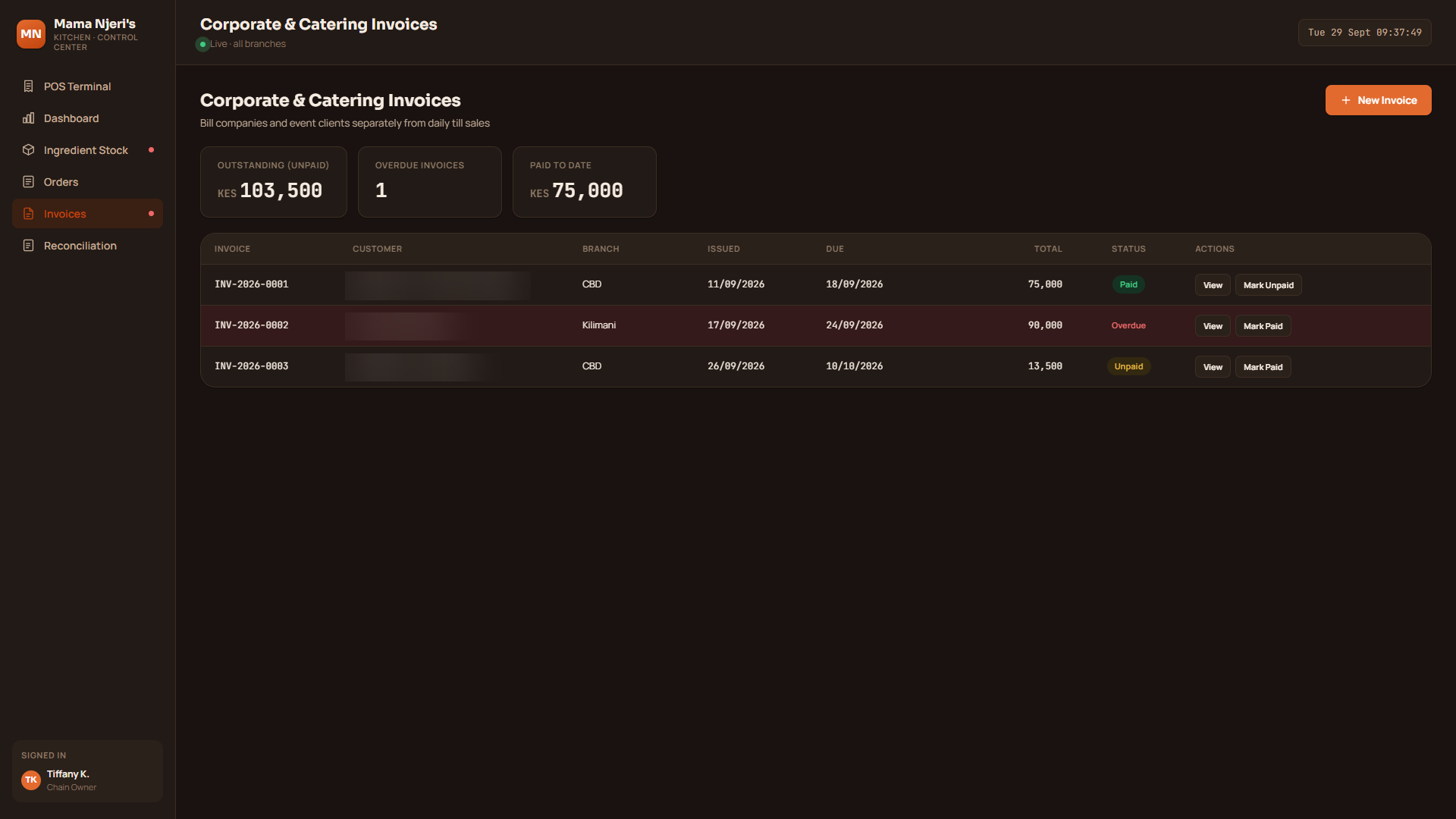
Corporate client names on the invoices screen are blurred to protect those companies' confidentiality; everything else is real, live data from the system.
A complete point-of-sale and back-office platform built for a 4-branch Kenyan restaurant chain.
Mama Njeri's Kitchen was running four branches (CBD, Kilimani, Ngong Road, and Kasarani) on manual till reconciliation, with no real visibility into ingredient usage. Orders, kitchen prep, stock, and billing were disconnected. We were brought in to design and build a unified POS and management system that could run the till, the kitchen, and the books from one platform, tailored to how Kenyan restaurants actually operate, not a generic retail POS with the labels changed.
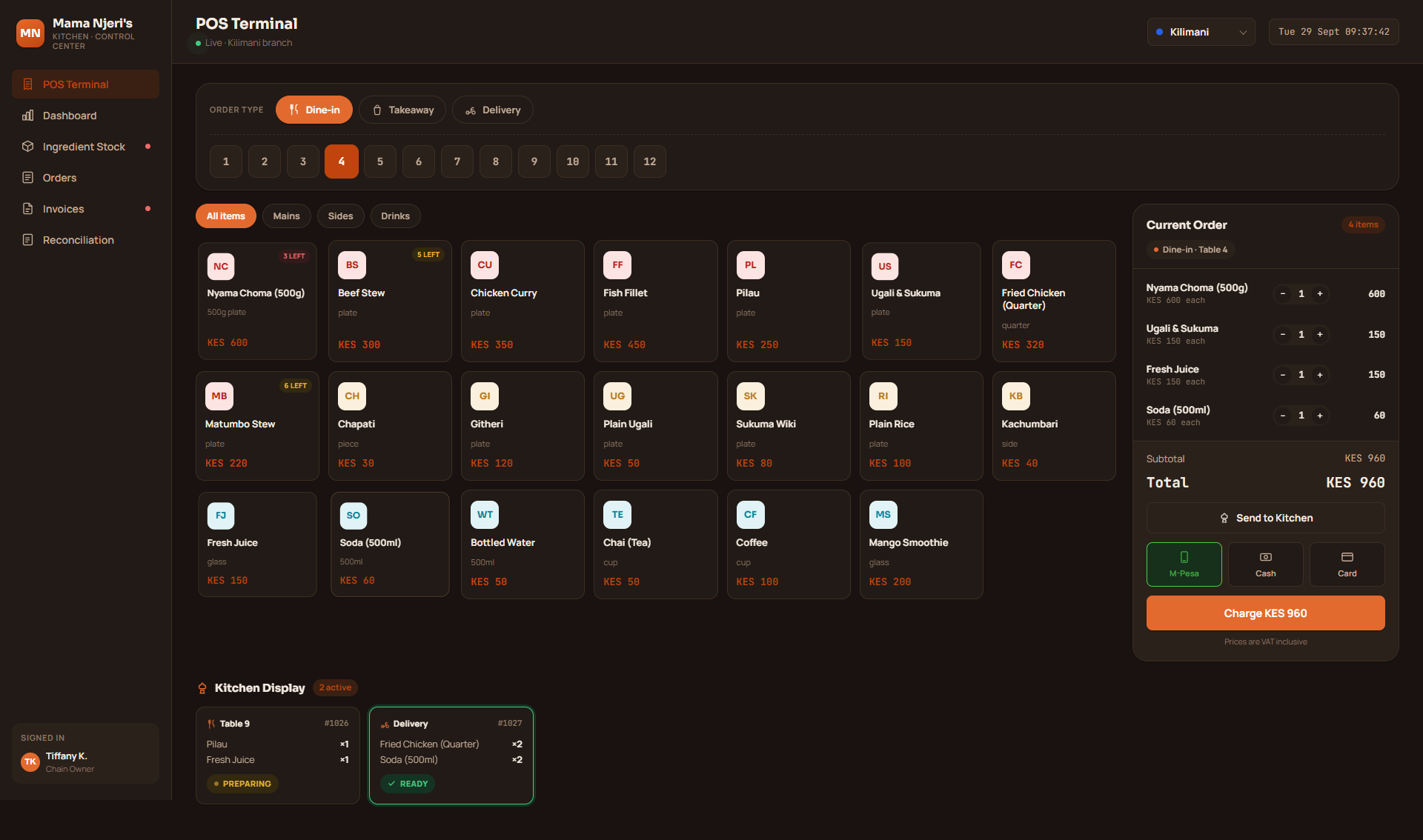
A tap-to-order menu covering the full 20-item menu across Mains, Sides, and Drinks, with a dedicated workflow for Dine-in (12-table assignment), Takeaway, and Delivery, since each changes how staff need to handle the order.
Orders sent from the till appear instantly on the kitchen screen as a live ticket queue, moving from "Preparing" to "Ready" so front-of-house always knows order status without shouting across the room.
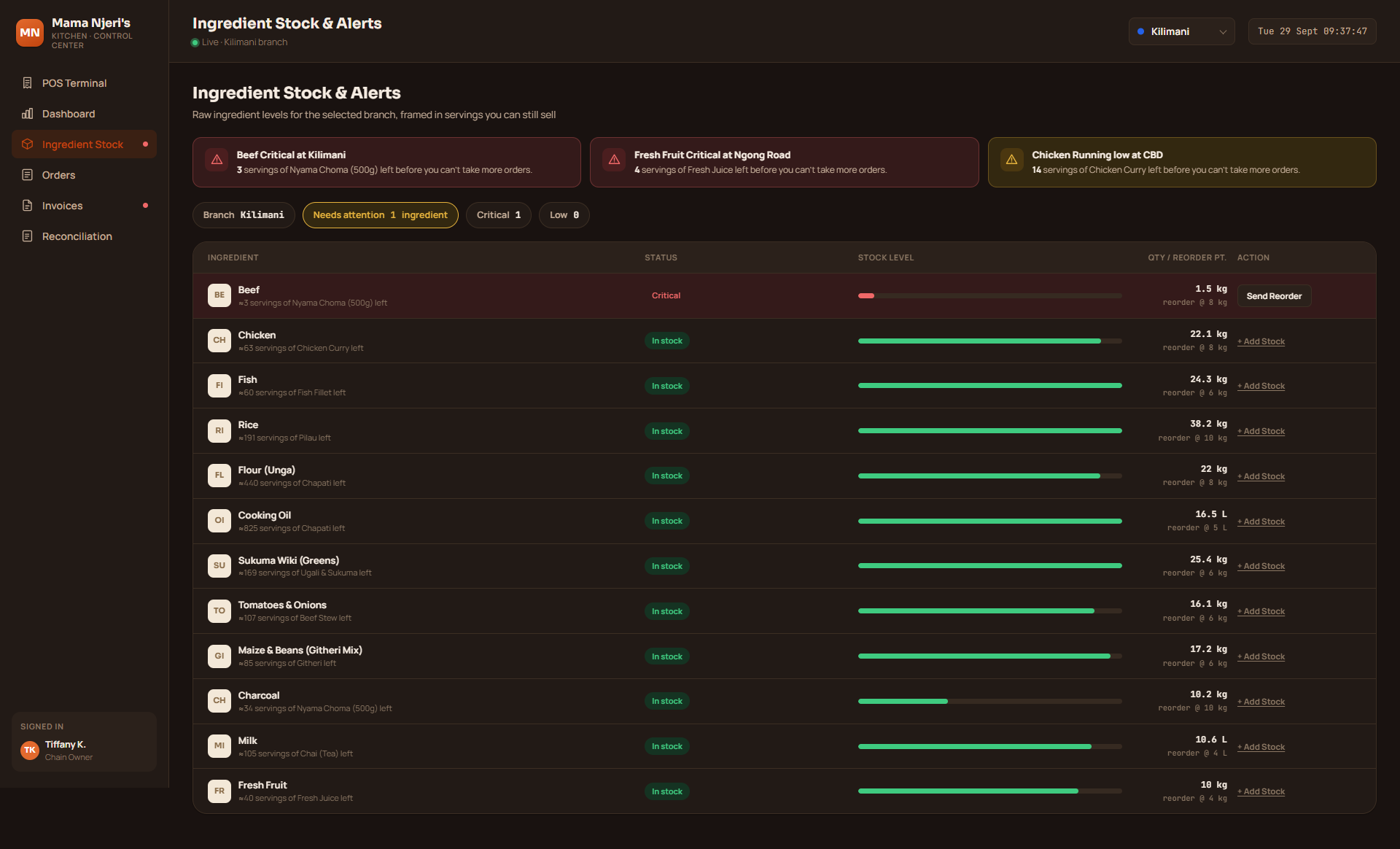
The core piece of the build. The system tracks raw ingredients, not finished dishes: selling one Nyama Choma order deducts the actual beef and charcoal behind it from that branch's stock, via a recipe engine mapping every menu item to its ingredients. Menu items automatically flag "only 3 left" or go sold-out in real time as stock runs down.
Instead of raw kilogram counts, low-stock warnings are framed the way an owner actually thinks about it: "3 servings of Nyama Choma left before you can't take more orders." Reorders can be sent to suppliers automatically or manually, with a stock-received step that closes the loop when deliveries land.
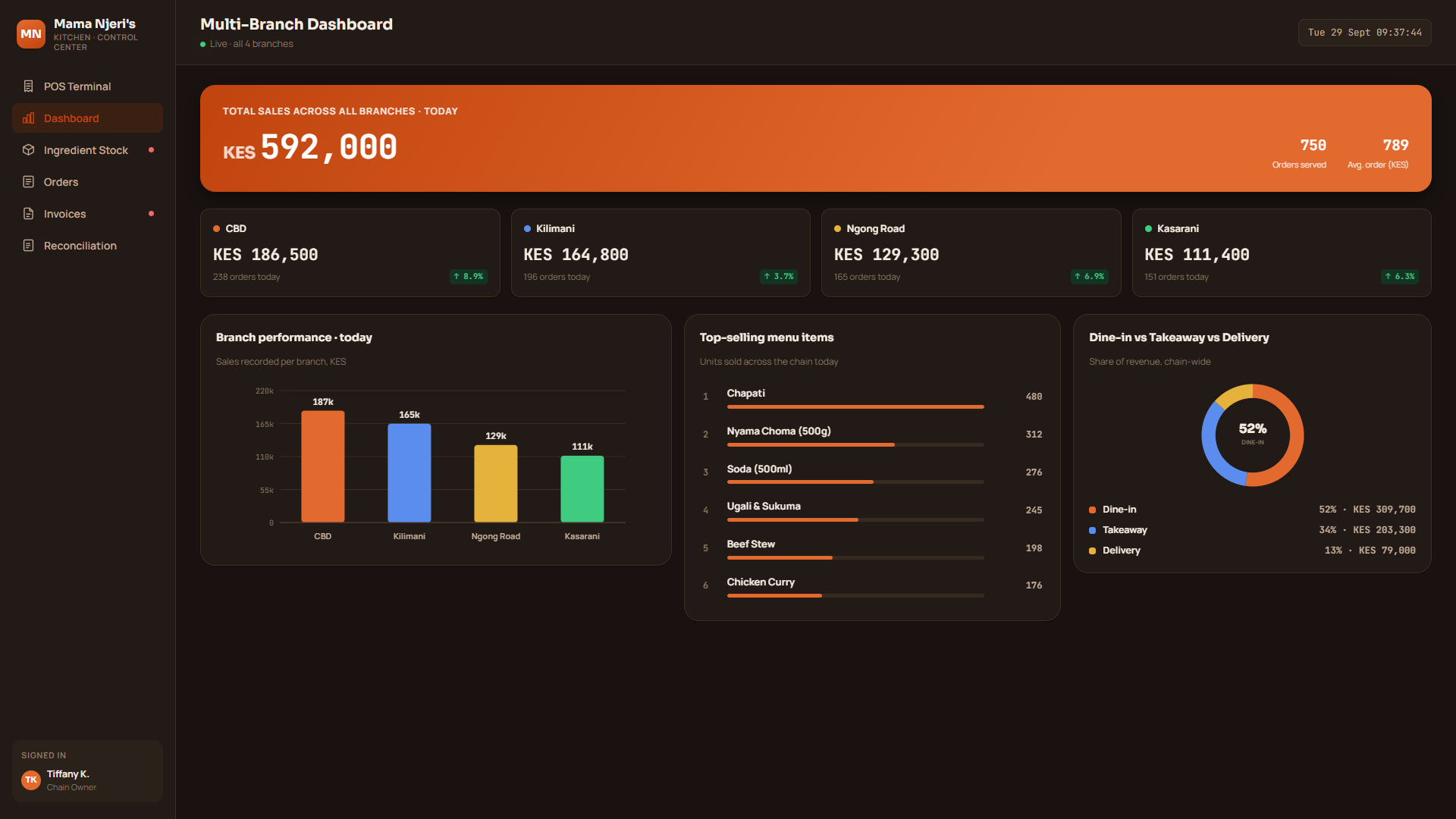
Live sales comparison across all four branches, top-selling items chain-wide, and a Dine-in vs. Takeaway vs. Delivery revenue split: visibility the ownership team never had before.
M-Pesa (with STK push), Cash (with change calculation), and Card, matching how the business actually gets paid.
Every sale produces a sequential, reprintable receipt with a full VAT breakdown (16%), the business's KRA PIN, and an eTIMS-referenced compliance code, keeping the client aligned with Kenya's e-invoicing requirements.
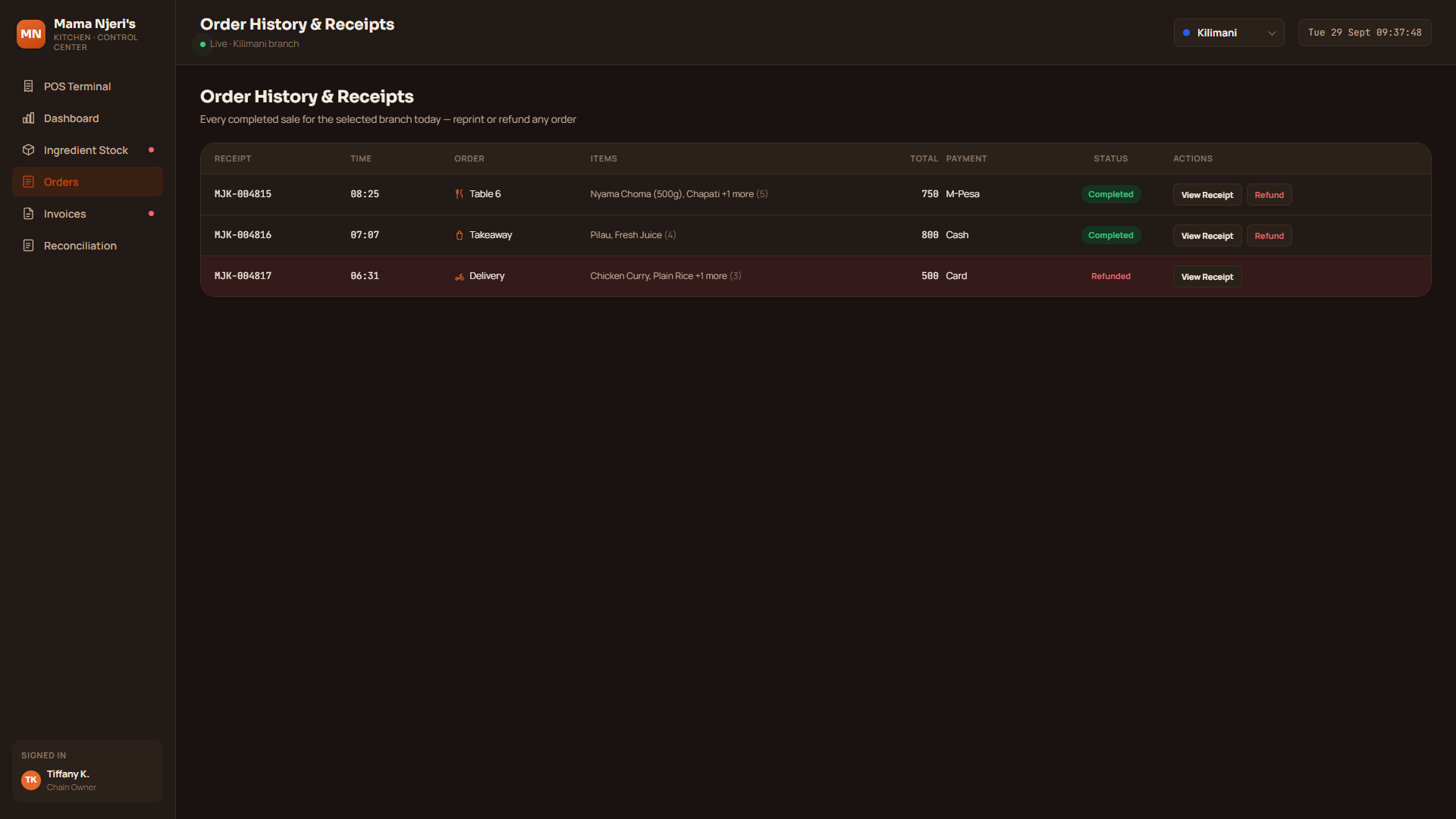
A complete, searchable sales log per branch with one-click receipt reprints and a refund flow that correctly reverses both the till total and the ingredient stock that was consumed.
A separate invoicing module for the client's B2B side (office lunch contracts, event catering), with line-item invoices, VAT calculation, due dates, and paid, unpaid, and overdue tracking: a revenue stream their old till system couldn't touch.
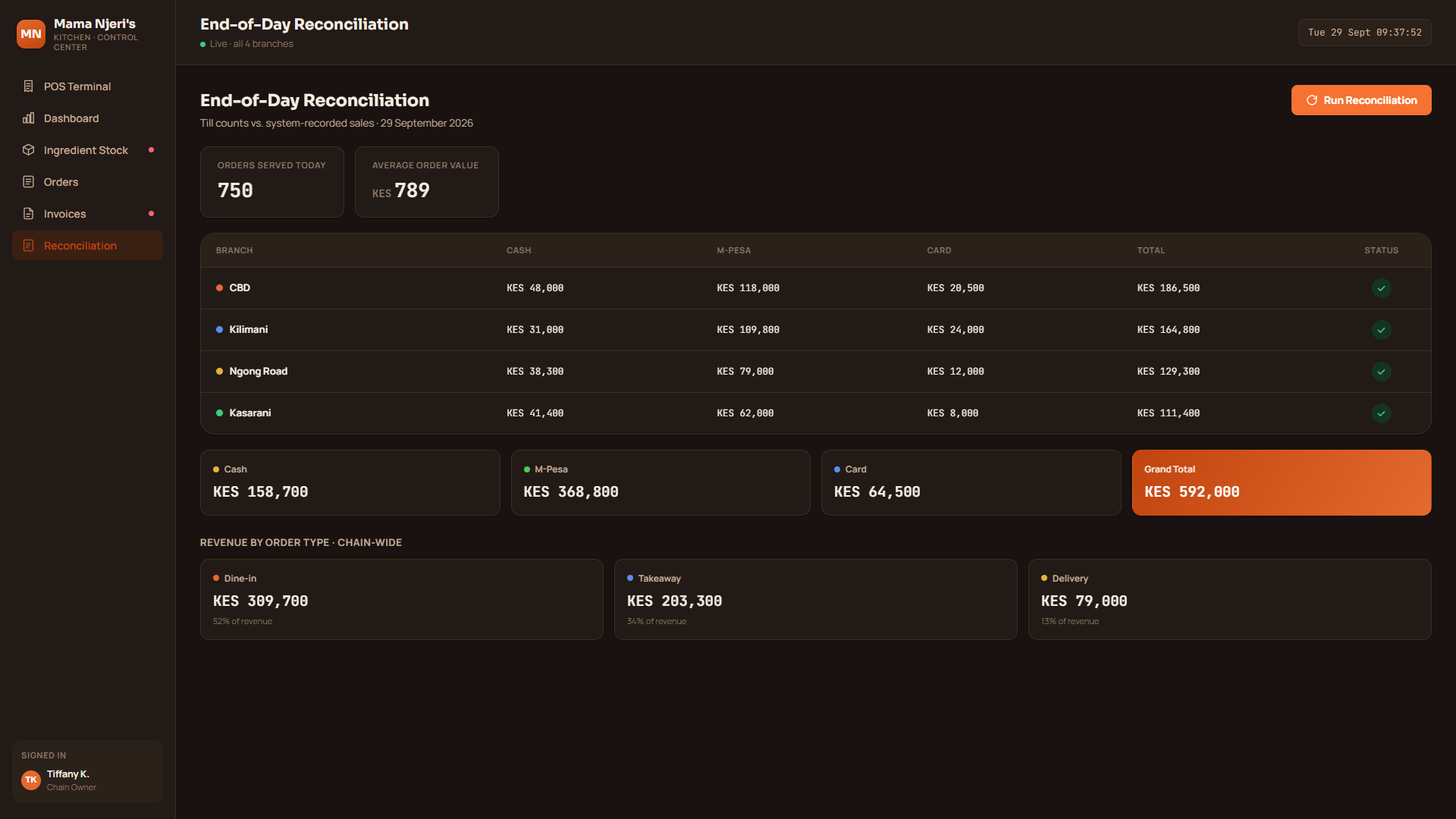
Automated matching of cash, M-Pesa, and card totals against system records, with order-type revenue breakdown and daily KPIs: orders served, average order value.
A lightweight, dependency-free front-end architecture: fast to load on modest till hardware, easy to extend, with all business data (menu, pricing, recipes, branch list) centralized so the client's team can update it without touching code. Custom-built charts and a full light/dark interface theme round out the finish.
Corporate client names on the invoices screen are blurred to protect those companies' confidentiality; everything else is real, live data from the system.
The client moved from four disconnected tills to one system giving real-time visibility across the whole chain: sales, stock, and billing in one place. The ingredient-tracking layer gave them a first: knowing exactly how many servings of their bestsellers they can still sell before running out, instead of finding out at the pass.
Book a free Business Systems Audit and we'll map out what a system like this would look like for your business.
Book your free Business Systems Audit